Green Belt Planning

Obtaining Green Belt Planning Permission For Building on Green Belt in The UK.

What is Green Belt?

Green belt (paraphrase from NPPF) is a special designation of land which is preserved for its own sake. Land is designated ‘Green Belt’ by local authorities to resist urbanisation. As such it can be incredibly difficult to obtain planning permission to build on these areas.

Green Belt covers an estimated 12.5% of the country (over 1.6 million hectares). Some Local Planning Authorities like Epping Forest, Warrington, and Cheshire have as high as 99.4% of their area designated as Green Belt. These areas have a high degree of land set to pasture, parks, forests and open countryside.
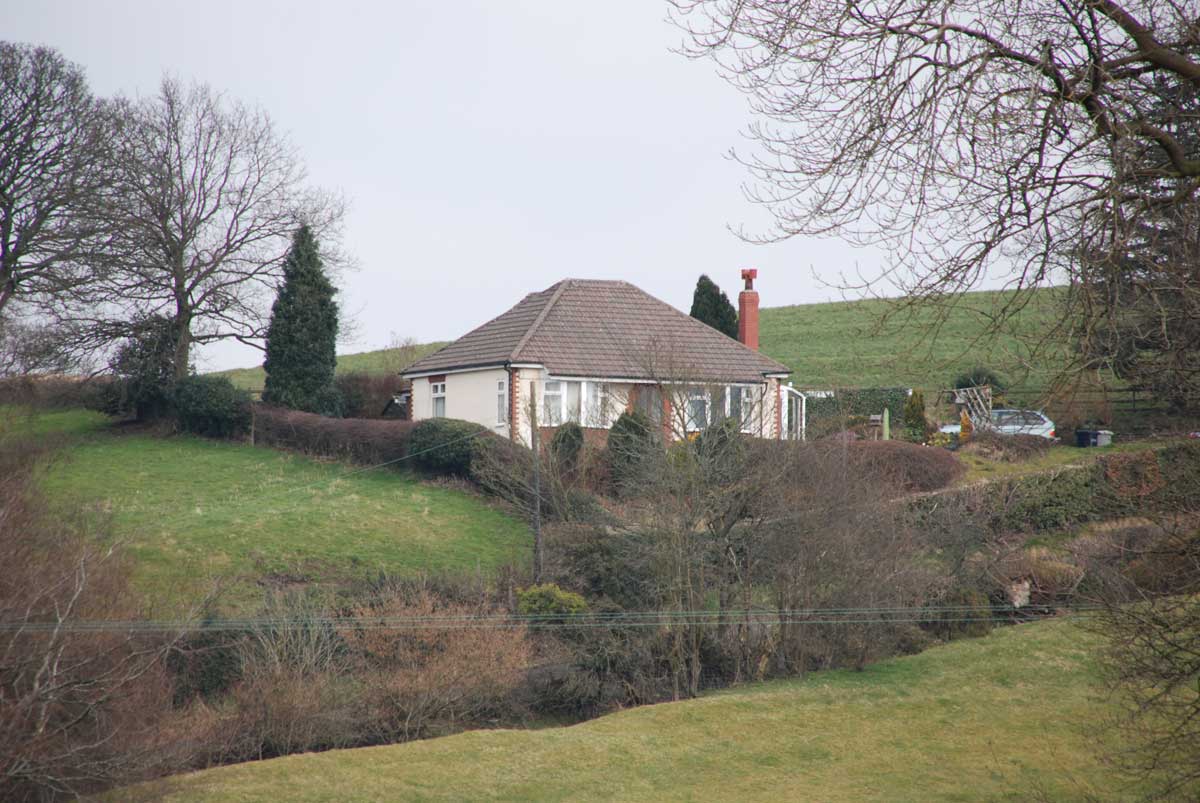
The National Planning Policy Framework (NPPF) states that “The Government attaches great importance to Green Belts. The fundamental aim of Green Belt policy is to prevent urban sprawl by keeping land permanently open; the essential characteristics of Green Belts are their openness and their permanence.”

The Green Belt serves five purposes:

  1. to check the unrestricted sprawl of large built-up areas;
  2. to prevent neighbouring towns from merging into one another;
  3. to assist in safeguarding the countryside from encroachment;
  4. to preserve the setting and special character of historic towns; and
  5. to assist in urban regeneration, by encouraging the recycling of derelict and other urban land.

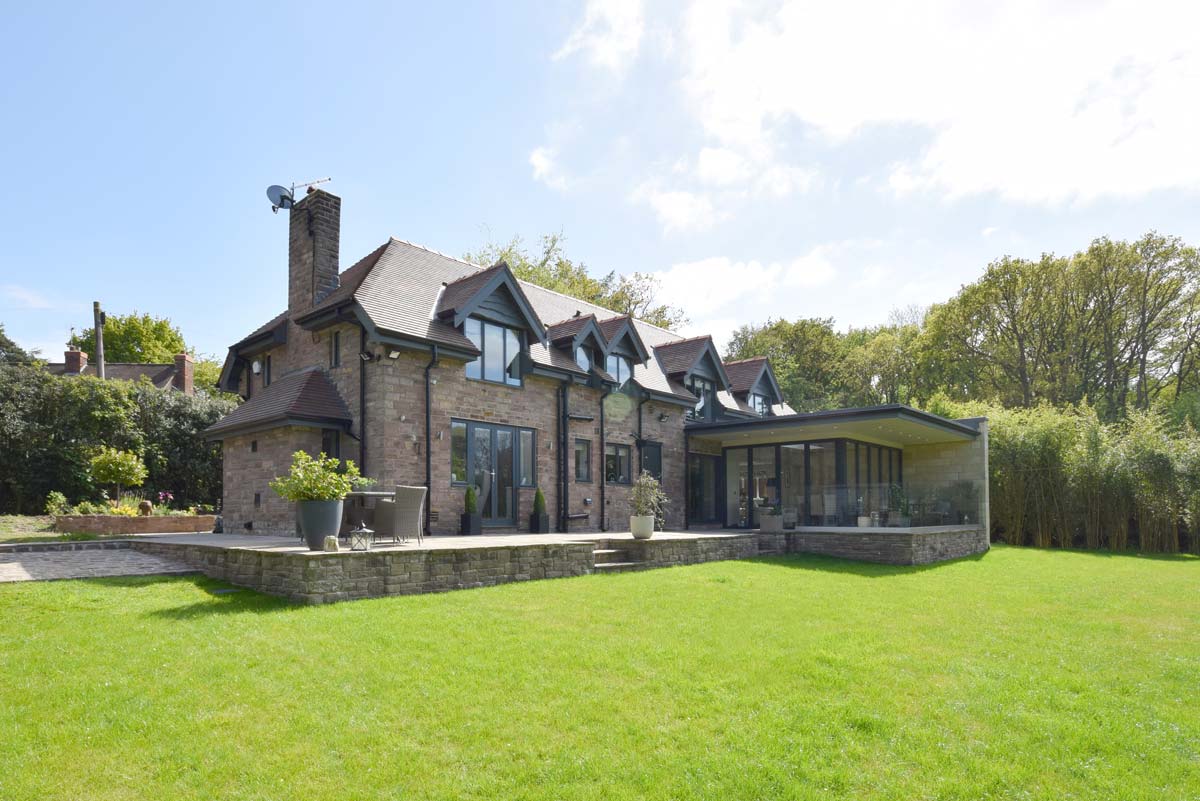
As well as working on a range of developments within the Green Belt a core element of our experience is submitting planning applications and obtaining valuable planning permission for replacement dwellings and house extensions.

Please see our dedicated case-studies page for further information.

The Green Belt continues to be a hotly debated topic at local and national Government level with discussions about reducing its extent or allowing more homes to be built. The Government has recently introduced a further classification of land within the Green Belt, called Grey Belt, which creates greater opportunities for development within Green Belt. Click here for more information.

At plande, we continue to keep abreast of these ongoing issues and work with relevant stakeholders to influence how Green Belt development should evolve.

GET EXPERT HELP

What Development is allowed in the Green Belt?

The NPPF states that the construction of new buildings as inappropriate in the Green Belt and that “Inappropriate development is, by definition, harmful to the Green Belt and should not be approved except in very special circumstances.”

How Can I Get Planning Permission To Build on Green Belt?

There are several exceptions that may allow you to get planning permission for development on land designated as Green belt: 

  • Removing land from the Green Belt – this may sound obvious but it notoriously difficult to achieve. The NPPF state quite clearly that there needs to be exceptional circumstances for them to do so. It could be that there is an elevated demand for new homes, but councils need to demonstrate that every other avenue has been explored first.That need to prove they have exhausted all possibility of using Brownfield sites, that density in current builds has been optimised and that they have considered the needs of neighbouring councils. The process of obtaining planning on Green belt is time consuming, and highly political with a relatively low chance of success, especially considering the competition that exists between other housebuilders and stakeholders.
  • For agriculture and forestry – If you are planning to rebuild houses for agriculture and forestry workers. Under special circumstances where workers are required to live in a certain place, for animal welfare, for example, buildings can be erected on Green Belt.
  • Limited infilling or the partial or complete redevelopment of previously developed – as long as the openness of the Green belt is maintained then brownfield land can be built upon – that is the redevelopment of previously developed land.
  • Provision of appropriate facilities (which would normally be seen to be suitable for rural/ countryside locations) – This could be for paces like cemeteries and outdoor sporting facilities where the openness of the Green Belt is maintained.
  • The extension or alterations of buildings (including house extensions) – this can be acceptable as long as the overall proportions of the building are not exceeded
  • Replacement of buildings (including dwellings) – providing that the new building is of the same size and proportions.
  • Limited infilling in villages – under limitations provided in the Local Plan, strictly limited affordable housing for local communities may be allowed.
  • Certain other works including re-use of buildings; material changes of land use

Green Belt Replacement Homes & Dwellings

Green Belt replacement dwellings are an allowable exception under national and local green belt policy.

The NPPF states that “the replacement of a building, provided the new building is in the same use and not materially larger than the one it replaces”.

While there is no definitive legal definition of “materially larger” there have been many appeals and legal cases which try to ascertain what the term means and what scale should be allowable.

In addition, each Local Planning Authority will have their own definition of what they would consider “materially larger” when considering green belt replacement homes, but often these range from around 15 – 30% from the existing dwelling.

Get Expert Help

The policies for house extensions within the Green Belt have a key difference in that such calculations are based on the “original” house whereas green belt replacement homes calculations are based upon the “existing” size of the home.

The two different calculations can help to dictate or plan the strategy for a plot with an existing house.

Plande has a wide range of experience of green belt replacement dwellings and justifying “materially larger”. The following case-studies provide some interesting examples and are not necessarily an exhaustive list.

The brief for a green belt replacement dwelling is often to create a house either as large as possible or significantly more than either the existing house or that policies would allow. While this would normally not be acceptable we have obtained green belt replacement home planning permission for far in excess of what either policy or the LPA would normally allow.

Green Belt House Extensions

Green Belt House Extensions are an allowable form of development as defined by the National Planning Policy Framework (NPPF) as well as Local Planning Authorities planning policies.

The NPPF provides for “the extension or alteration of a building provided that it does not result in disproportionate additions over and above the size of the original building”.

Generally, we would expect that each LPA green belt house extensions policies would typically dictate a certain percentage over the “original house” often around 15 – 30% either in floor space or volume terms.

The term “original house” is critical in that it means the house as originally constructed or as it stood in 1948. Any extension to the original house would need to be taken into account when investigating further green belt house extensions and in many cases, houses have already had extensions larger than the LPA would allow. As will be highlighted in the following examples, this is not always the end of the options.

Understanding the original house and the scale of previous green belt house extensions is critical as a starting point before any design works are undertaken, however, we are often approached once designs have been produced (or even considered by the Council), still with successful results.

Also see our page on House Extensions

The above is a simplistic summary of the exceptions and policies so please contact us with regards to your specific project.

Also, there are many green belt planning loopholes that you may not be aware of, but we are well versed in. While these don’t allow you to break the law they can provide a useful way to get your greenbelt planning application sanctioned by exploiting some simple holes in the regulations. Examples include:

Common Greenbelt Loopholes:

  • Redeveloping a brownfield site or previously developed land.
  • Converting barns, sheds and other old agricultural buildings.
  • Gap sites, Infill developments between existing properties on underutilised land.
  • Affordable housing schemes for the local community.
  • Agricultural worker’s homes – although restrictions apply.

There also exist ‘Very Special Circumstances‘ where green belt planning can be granted despite the obvious objections to it. There has to be a very strong reason for planning to be granted on green belt, and it needs to outweigh the harm to the greenbelt itself. Such special circumstances are becoming more common as the government slowly relaxes it’s rules and regulations in order to speed up housing development in the UK.

Such circumstances can include:

  • Local housing need.
  • A development which will boost the local economy.
  • Reuse of derelict land that sits within the green belt.
  • Provision of essential infrastructure for the community.
GET EXPERT HELP

Disclaimer: This page provides an introduction only and is not a definitive statement of the law and should therefore not be relied upon. The information above relates to England only. Policies across the rest of the UK may differ. Contact your Local Planning Authority for advice and confirmation before any works are carried out. All images used are for illustrative purposes only. Read the full disclaimer here.

Get in touch

Whether you need an expert on your team to secure permission for a major mixed-use scheme or a unique self-build home, our fresh planning insights will help you achieve your goal.